Beyond Life Coaching
Conversational Change –
The Beyond Words Model
Most people looking for change are met with hype and surface-level, motivational coaching. I have taken a different path. Sustainable shifts happen when we stop trying to “fix” ourselves with intensity, and instead learn to understand the underlying mechanics of how we think, feel, and act.
My approach as a Conversational Change Specialist is built on looking underneath the surface narrative. Instead of managing symptoms or forcing positive thinking, we explore the subtle linguistic patterns, habits, and nervous system responses that keep old cycles looping in place.
In everyday terms, this means we aren’t going to spend our time just analysing the details of your problems or trying to force a positive attitude. Instead, we pinpoint the exact, automatic reactions that cause you to feel stuck. Once those subconscious loops are resolved, you stop having to fight your own willpower to make progress—the change simply becomes the natural direction your system takes.
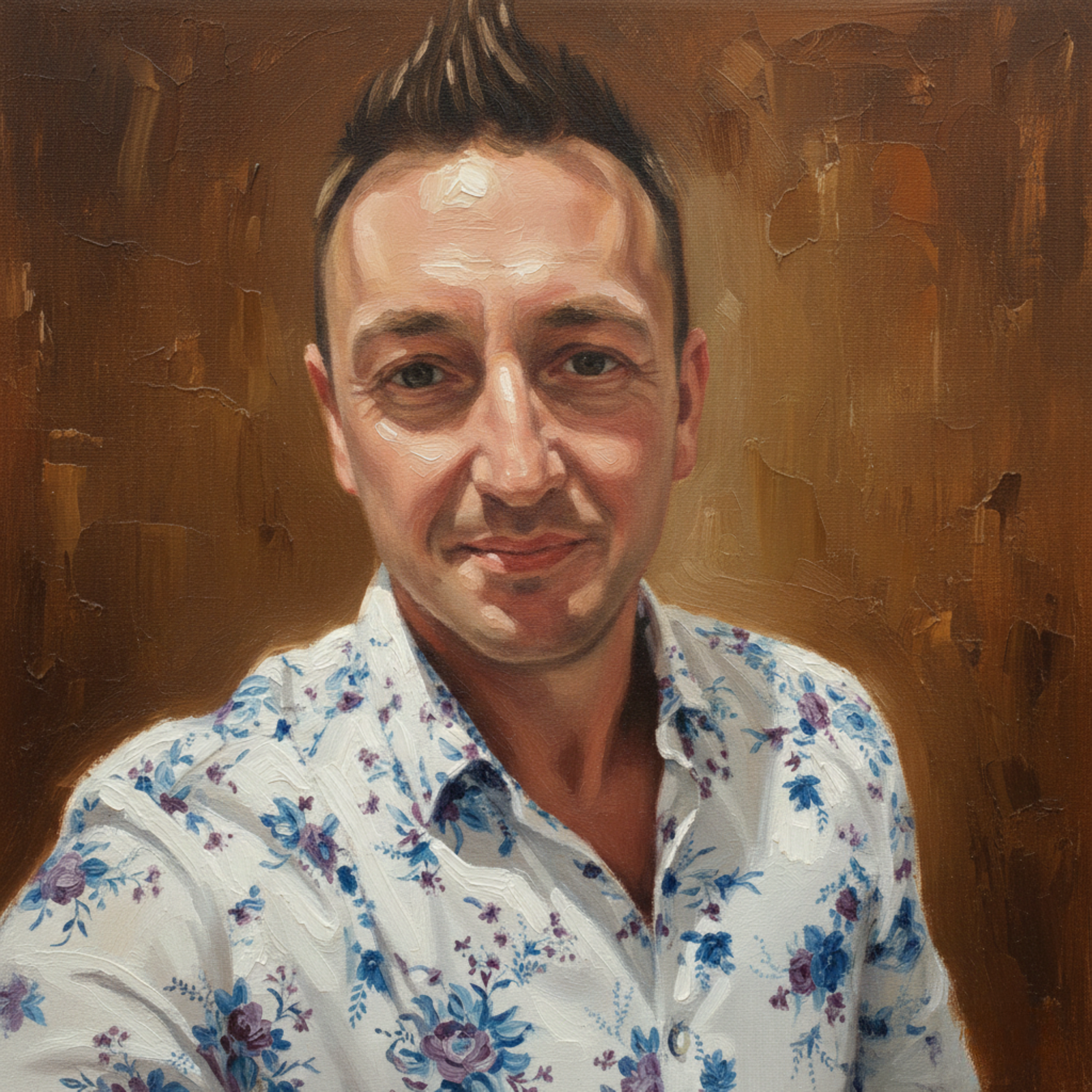
David Fenwick
A Grounded Approach to
Change

This space is dedicated to Humanistic Change—a blend of deep psychological models and practical, everyday application. It is about moving beyond the surface-level noise of standard coaching to find a way of living and working that feels congruent, clear, and sustainable.
True integration requires looking at how our internal landscape is constructed. Instead of forcing alignment or fighting conflicting parts of ourselves, we focus on understanding the map of your inner world. By identifying where your attention gets trapped and how your habits are maintained, we create the structural space required for lasting transformation to emerge naturally.
Simply stated, you don’t have to exhaust yourself trying to “fix” who you are or battle your own mind. We simply look at what is running in the background, untangle the friction, and align your thoughts with your actual goals. When your internal system is working together rather than fighting itself, moving forward in your life and business ceases to be a struggle and simply becomes straightforward.
Deeper, Practical Reflection
I don’t believe in the traditional hype of the coaching industry. Real, sustainable progress doesn’t come from temporary motivational highs or forced enthusiasm. Instead, true personal and professional shifts are built on two core pillars that combine psychological depth with real-world execution.
The first pillar is Grounded Reflection. This means looking past the surface-level stories we tell ourselves and mapping out the underlying structure of how your mind actually operates. By exploring the subtle linguistic habits, background noise, and automatic nervous system patterns that drive your daily behavior, we pinpoint exactly where your energy is getting trapped.
Put simply, this unlocks the second pillar: Practical Utility. Deep insights are meaningless if they don’t translate into your regular routine. We focus on providing simple, integrated tools that work with your system rather than against it. Once these background loops are resolved, navigating your life and work stops feeling like an uphill battle of willpower and simply becomes straightforward and functional.

Shifting Old Patterns

Many people believe that breaking deep-seated habits, mental blocks, or repetitive behaviors requires years of painful, exhausting effort. They treat personal change like an ongoing battle of willpower against their own mind. But lasting shifts don’t come from fighting an old pattern; they come from changing the internal structure that allows it to loop.
We don’t spend our sessions just analysing your past or talking endlessly about the problem. Instead, we focus directly on the active mechanics of your experience—how your mind and nervous system physically organise attention, focus, and tension in the present moment. By tracking these subtle subconscious and linguistic loops, we can disrupt them right where they live.
In plain terms, this means you stop wasting mental energy trying to force yourself to be different. We locate the background noise that keeps you feeling stuck, clear out the friction, and allow your entire system to naturally reorganize. Once those loops are resolved, a state of high focus, clarity, and ease stops being something you have to chase and simply becomes your new baseline.
Over a Decade of Immersion in Change-Work
My background spans over a decade as a certified NLP Coach and Hypnotist through Tad James, and Master Practitioner of Humanistic Neuro-Linguistic Psychology (HNLP), alongside more than 2,000 hours of immersive study in John Overdurf’s Beyond Words model of conversational change.
This foundational training allows me to work directly with the subconscious structures of the mind rather than just scratching the surface.
I intentionally maintain a professional, quieter approach to human development, prioritising real-world results and depth of knowledge over marketing sizzle.
True expertise isn’t about relying on aggressive, high-pressure coaching scripts or industry hype. It is about having the structural tracking tools necessary to hear exactly how a person’s internal noise is being organised, allowing for an elegant and non-invasive resolution.
You are partnering with someone who understands the actual mechanics of behavioral change, not a typical coach using motivational checklists
The result is a calm, stable, and highly practical environment focused strictly on what works to move your life and business forward.
Ready to
move
beyond
standard coaching?
let’s start with the work that matters.